

The Nepal Disaster Exposes a Fatal Blind Spot in Natural Disaster Risk Governance
Gold Mercury calls for the urgent creation of a Himalayan Cascading Risk Intelligence & Early Warning System: an integrated transboundary architecture designed to anticipate, detect and reduce the human and systemic consequences of cascading disasters across the Himalayan region.
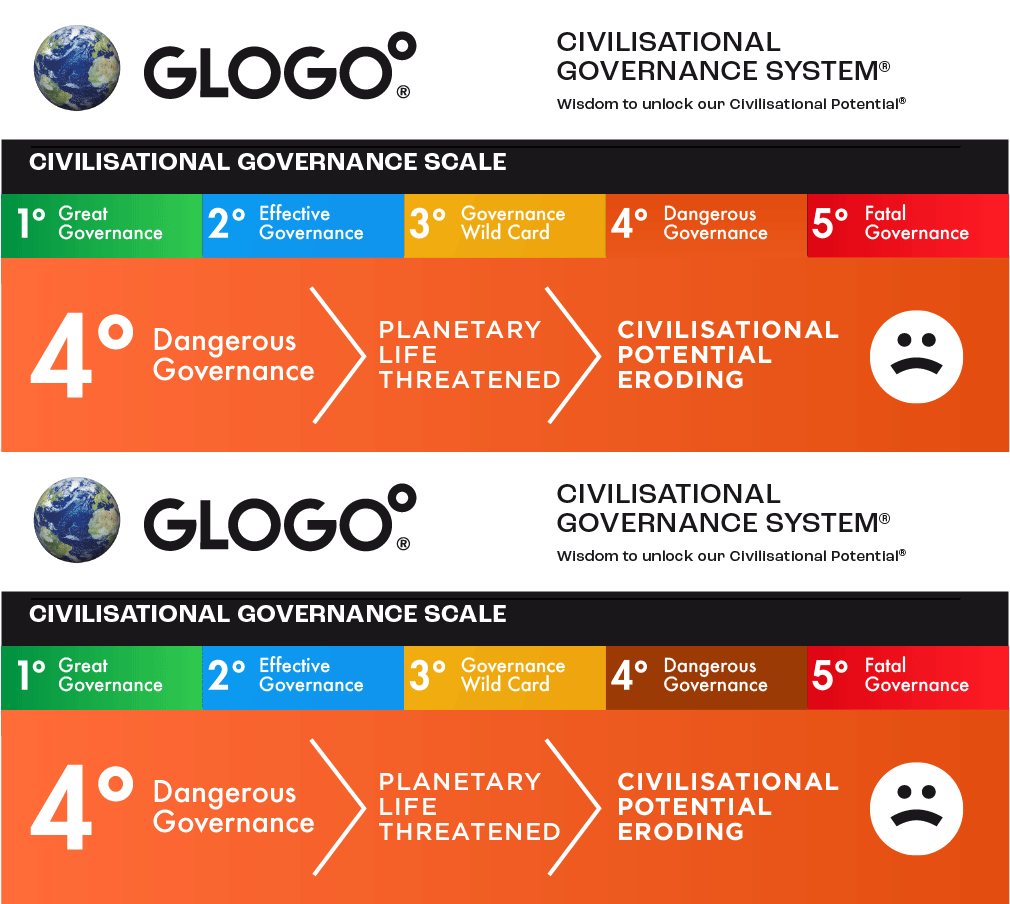
GLOGO® GOVERNANCE ALERT LEVEL 4 > DANGEROUS GOVERNANCE > PLANETARY LIFE THREATENED |
AREAS: GLOBAL ENVIRONMENT | SUBAREAS: DISASTER GOVERNANCE & RISK REDUCTION
The Rasuwa catastrophe in Nepal demonstrates why the future of disaster prevention cannot depend on predicting every event—but on building intelligent systems capable of detecting, communicating and protecting populations when the unpredictable occurs.

By GLOGO® Nicolas De Santis, Chief Editor.
Published | 2nd September 2026
GLOGO® CIVILISATIONAL GOVERNANCE ALERT LEVEL 4° - SUMMARY
Natural hazards are becoming faster, more complex and more interconnected, while prevention systems remain fragmented, reactive and designed for yesterday's risks. The Rasuwa glacier collapse was an extreme event that occurred in a genuine monitoring blind spot and may not have been predictable in advance. But the resulting catastrophe exposes a wider failure: after repeated cascading disasters across the Himalayas, the region still lacks an integrated architecture capable of anticipating emerging risks, detecting catastrophic events at onset, sharing information across borders and warning populations downstream. The Rasuwa catastrophe demonstrates why the future of disaster prevention cannot depend on predicting every event—but on building intelligent systems capable of detecting, communicating and protecting populations when the unpredictable occurs.
HERE'S WHAT TO KNOW
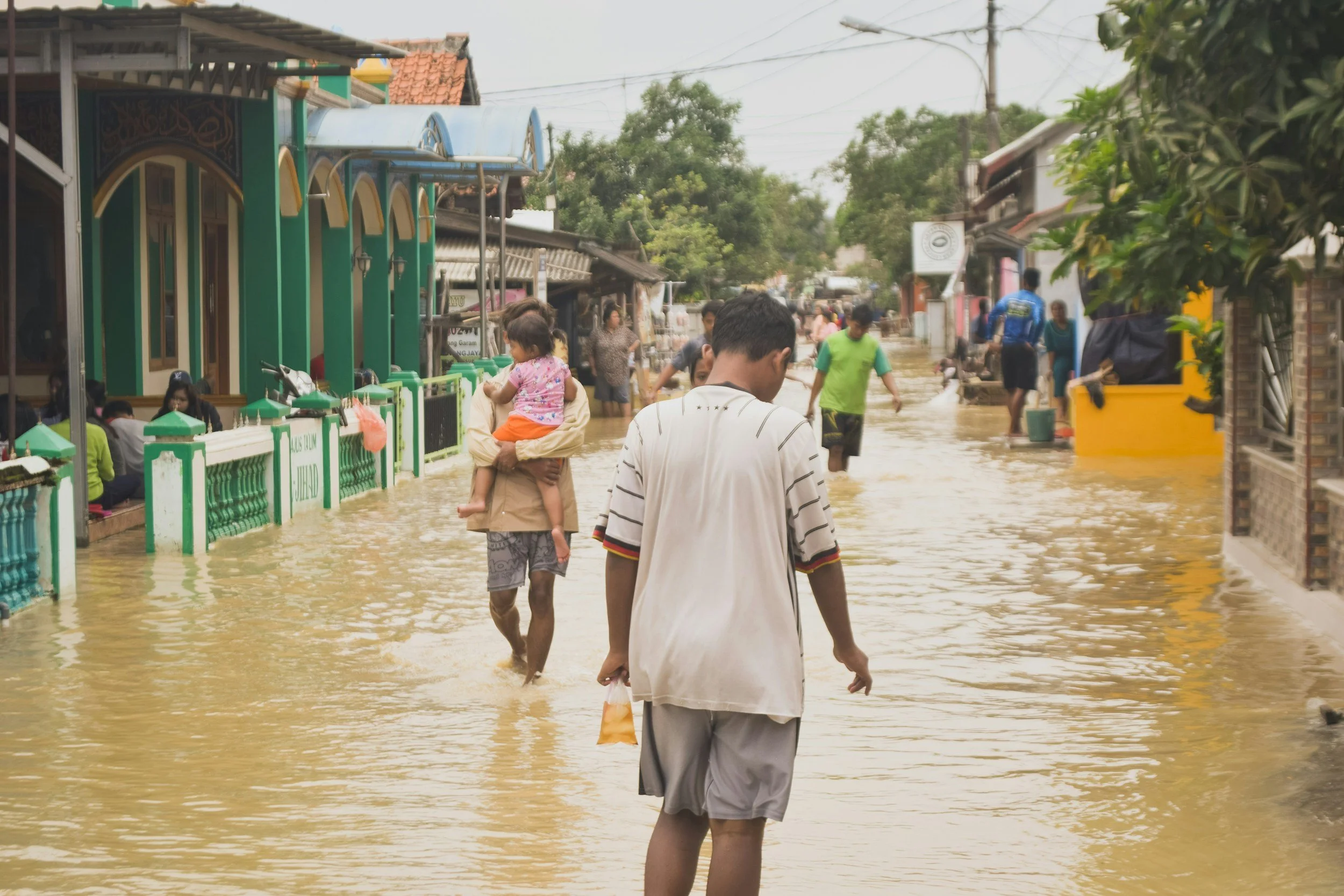
A catastrophic cascade, not a conventional flood: On 26 August 2026, a massive collapse of glacial ice and bedrock high in the Langtang range triggered a devastating chain of cascading hazards that swept across the China–Nepal border and down the Bhotekoshi/Trishuli River corridor. The event became Nepal's deadliest extreme-flow disaster on record, causing catastrophic loss of life and destruction of settlements, infrastructure, bridges and hydropower facilities.
The precise event was extraordinarily difficult to predict: Scientific analysis indicates that the source area was a genuine monitoring blind spot. No authority or scientific institution had identified the site as an imminent risk, and no system can monitor every unstable slope across the vast Himalayan region.
But prevention did not have to end when prediction failed: A subsequent scientific assessment identified pre-event indications visible in hindsight, including brown meltwater and cracks propagating into surrounding bedrock days before the collapse. More importantly, scientists concluded that while the first locations were hit too rapidly for evacuation, comprehensive downstream warning systems could have saved a significant number of lives.
The real governance failure is systemic: The Himalayas face increasingly complex cascading hazards, yet monitoring systems remain fragmented, hazard-specific and constrained by national borders. Systems designed to monitor rainfall, river levels or known glacial lakes are not necessarily equipped to identify an ice-rock avalanche that becomes a high-speed transboundary debris flood.
A global precedent already exists: After the 2004 Indian Ocean tsunami exposed the devastating consequences of inadequate regional warning infrastructure, the international community built a shared tsunami warning system. The Rasuwa disaster now raises a comparable question for the world's highest mountain system:
must the Himalayas experience a succession of catastrophes before a transboundary cascading-risk intelligence and early-warning architecture is built?
BASIS FOR ISSUING THE GLOBAL GOVERNANCE ALERT
The August 2026 Rasuwa disaster exposes a fundamental challenge for 21st-century disaster governance.
Not every catastrophe can be predicted.
But modern societies can no longer treat the inability to predict an event as an excuse for being unable to respond once it begins.
The disaster was not a single flood event. It was a cascade: a high-altitude glacial and bedrock collapse generated an ice-rock avalanche, which descended rapidly into the Lhende River, mobilising water, sediment and debris into an extraordinarily destructive flow that crossed an international border and travelled far downstream.
This distinction is critical.
The future of disaster risk is increasingly defined not by isolated hazards, but by interactions between hazards.
A glacier destabilises.
A mountainside collapses.
An avalanche enters a river.
A debris flow accelerates.
Infrastructure is overwhelmed.
Communities far from the original source are suddenly exposed.
Each stage amplifies the next.
Yet much of the world's disaster infrastructure remains organised around individual categories: floods, landslides, earthquakes, storms or glacial lake outbursts.
Rasuwa demonstrates the dangerous gap between single-hazard monitoring and CASCADING-RISK INTELLIGENCE.
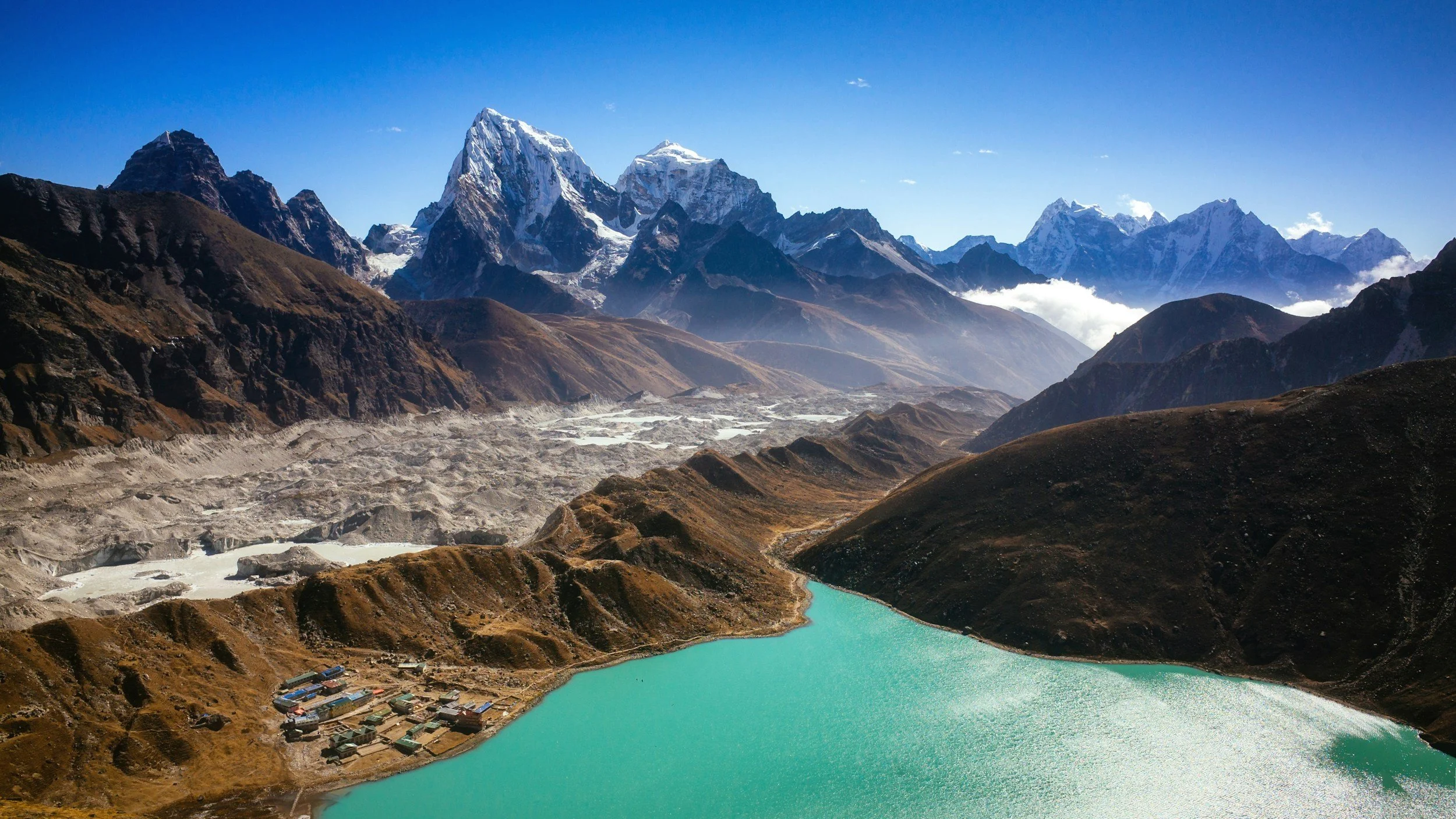
GEOLOCATION - HYMALAYAS
The disaster struck the Nepal–China border along the Bhotekoshi/Trishuli River corridor.
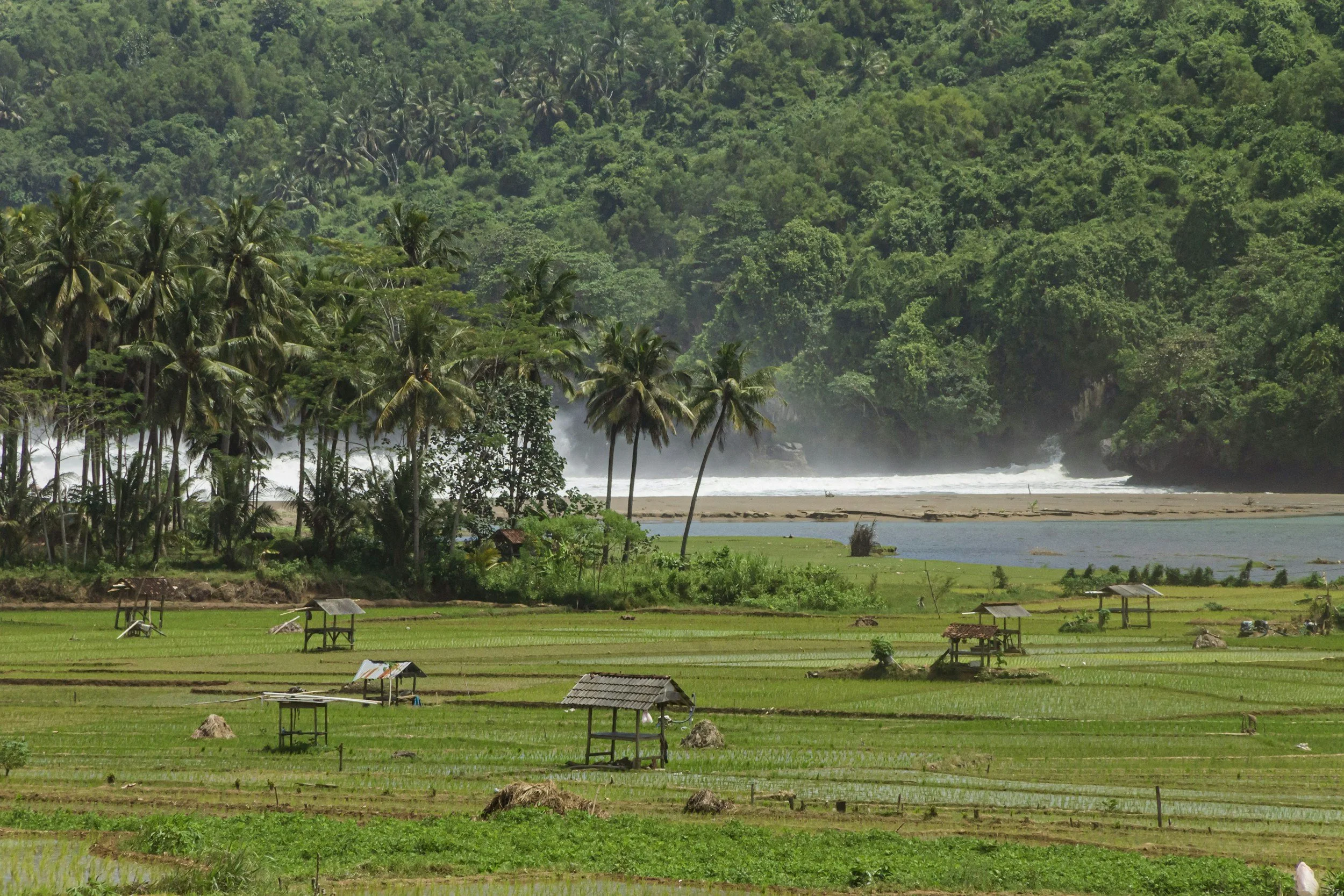
Indonesian Tsunami
ALERT 4° GOVERNANCE PRECEDENTS
The 2004 tsunami demonstrated the devastating consequences of a transboundary natural hazard that moved faster than institutions could detect, communicate, and warn vulnerable populations about.
“The lesson of Rasuwa is not that every disaster can be predicted. It is that unpredictability can no longer be an excuse for unpreparedness. When catastrophic events cannot be forecast in advance, societies must be capable of detecting them instantly and warning those still in harm’s way.”
1. A CASCADING DISASTER, NOT A CONVENTIONAL FLOOD
The disaster began high in the Langtang range at approximately 5,200 metres.
A massive volume of glacial ice and bedrock detached from the mountainside and descended more than 2,000 metres down a steep slope. The resulting ice-rock avalanche entered the Lhende River, generating an immense and rapidly moving debris-water flow.
The cascade then travelled towards the China–Nepal border, reaching the Rasuwagadhi border facilities within minutes.
From there, the destructive flow continued downstream through the Bhotekoshi/Trishuli River corridor, devastating settlements, trade infrastructure, bridges and hydropower facilities.
The consequences extended far beyond the point of origin.
Communities downstream faced a disaster generated by a mountain collapse they could neither see nor understand in real time.
This is the defining challenge of cascading hazards:
The event may begin in one location, but the catastrophe unfolds across an entire system.
2. THE CRITICAL GOVERNANCE GAP: UPSTREAM BLIND SPOTS, DOWNSTREAM TIME
The most important lesson from Rasuwa is not that authorities should have perfectly predicted the collapse.
Scientific experts have made clear that this would have been extraordinarily difficult.
The source area sat in a genuine monitoring blind spot. The scale of the Himalayan landscape presents an immense challenge: countless glaciers, slopes and valleys are capable of generating extreme events, while monitoring remains geographically sparse.
No system can watch everything.
But this does not mean nothing can be done.
The crucial distinction lies between prediction before an event and detection immediately after its onset.
The initial avalanche travelled so rapidly that the first locations in its path had little or no realistic evacuation time.
Further downstream, however, the disaster created additional windows of time.
Scientific analysis indicates that more comprehensive warning systems could have provided sufficient lead time to save a significant number of lives in downstream communities.
This reveals a fundamental principle of future disaster governance:
WHEN PREDICTION IS IMPOSSIBLE, DETECTION SPEED BECOMES PREVENTION.
A modern prevention architecture must therefore operate across multiple stages:
Can we anticipate emerging risks?
If not:
Can we detect catastrophic failure instantly?
If so:
Can we rapidly understand the trajectory?
Then:
Can we automatically alert those still in harm's way?
And finally:
Can communities act on that warning?
Rasuwa demonstrates that prevention cannot be reduced to forecasting the exact moment a mountain will collapse.
Prevention must also mean being prepared for what happens next.
3. WARNING SIGNS THAT NO SYSTEM WAS WATCHING FOR
A subsequent scientific assessment found indications that, in hindsight, preceded the collapse.
These included visibly brown meltwater and signs of cracks propagating into surrounding bedrock days before the disaster.
This should not be interpreted as evidence that authorities ignored a known warning.
There is no basis for claiming that officials had identified the site as an imminent threat and failed to act.
The more important governance question is different:
Why was there no sufficiently comprehensive intelligence architecture capable of recognising emerging signals across a changing and increasingly complex mountain risk environment?
Existing monitoring efforts in the region had focused significantly on known glacial lakes and glacial lake outburst floods.
But Rasuwa emerged from a different hazard chain.
This is the structural problem.
A system can successfully monitor the risks it was designed to see—and still fail when the next catastrophe emerges from an interaction it was not designed to recognise.
The challenge for the future is therefore not simply to install more sensors.
It is to build systems capable of learning from each disaster, identifying new patterns and continuously expanding the map of what constitutes risk.
4. FROM HAZARD MONITORING TO CASCADING RISK INTELLIGENCE
The Rasuwa disaster demonstrates the limits of conventional disaster monitoring.
Traditional systems ask:
Is there a flood?
Is there extreme rainfall?
Is a known glacial lake expanding?
Has a river exceeded a critical level?
But cascading disasters require a different question:
What chain of interacting events could transform an emerging hazard into a catastrophe?
This requires a transition from isolated hazard monitoring towards Cascading Risk Intelligence.
Such an approach would integrate:
satellite observation of glaciers and remote terrain;
synthetic aperture radar and other remote sensing technologies;
seismic and acoustic detection networks;
hydrological monitoring;
terrain and hazard-chain modelling;
local and community observations;
artificial intelligence-assisted anomaly detection;
real-time cross-border information sharing;
automated downstream public warning systems.
No system will predict every event.
That is not the standard by which governance should be judged.
The question is whether societies are building the intelligence capacity to progressively reduce blind spots, detect catastrophic events faster and protect populations still beyond the immediate zone of impact.
The warning from Rasuwa extends far beyond the Himalayas.
Across the world, natural disasters are increasingly exposing the same structural weakness: risks are evolving as interconnected systems while prevention and governance remain organised around isolated threats and institutional silos.
Wildfires provide a powerful parallel.
The world's most destructive fires are rarely the consequence of a single factor. Extreme heat, prolonged drought, changing vegetation, high winds, land management, infrastructure vulnerability and expanding human settlements can combine to transform a local fire into a catastrophic regional disaster.
Yet responsibility for managing these interconnected risks is often divided between environmental agencies, land managers, emergency services, local authorities and national governments.
The result is a familiar governance gap: everyone manages part of the risk, but no one necessarily governs the system of risk as a whole.
The same pattern is emerging across floods, heatwaves, storms and mountain disasters.
A single-hazard approach is increasingly insufficient for a world in which climate conditions, ecosystems, infrastructure and human exposure interact in complex and unpredictable ways.
The defining challenge of 21st-century disaster governance is not simply to improve emergency response. It is to evolve from managing individual hazards towards understanding interconnected systems of risk. Rasuwa should therefore be understood as part of a wider global warning.
The age of cascading risk has arrived. Governance must now catch up.
THE BANDA ACEH PRECEDENT: WHEN DISASTER EXPOSES A MISSING SYSTEM
The Rasuwa disaster should not be compared directly with the 2004 Indian Ocean tsunami in terms of physical mechanism or scale.
The relevance of Banda Aceh lies in its governance lesson.
The 2004 tsunami demonstrated the devastating consequences of a transboundary natural hazard moving faster than institutions could detect, communicate and warn vulnerable populations.
The response was not simply better disaster relief.
The international community recognised a structural gap and responded by developing the Indian Ocean Tsunami Warning and Mitigation System.
The lesson was profound:
When hazards cross borders faster than governments can communicate, prevention cannot remain solely a national responsibility.
Rasuwa presents a comparable governance challenge.
The disaster itself crossed geographical and political boundaries:
A collapse in the Himalayas → a river system in China → devastation in Nepal → downstream impacts extending towards India.
Yet the monitoring and governance architecture remains fragmented.
Glaciers do not recognise borders.
Rivers do not stop at customs checkpoints.
Cascading disasters do not wait for diplomatic coordination.
BANDA ACEH TAUGHT THE WORLD THAT OCEANS REQUIRE TRANSBOUNDARY WARNING SYSTEMS. RASUWA DEMONSTRATES THAT MOUNTAINS DO TOO.
WHY THIS IS RATED LEVEL 4: DANGEROUS GOVERNANCE
Gold Mercury International rates this issue:
GLOGO® GOVERNANCE ALERT | LEVEL 4 > DANGEROUS GOVERNANCE > PLANETARY LIFE THREATENED|
GLOGO® FUTURE IMPACT SCALE
[1° — Great Governance] [2° — Effective Governance] [3° — Governance Wild Card] [4° — DANGEROUS GOVERNANCE] [5° — Fatal Governance]
Why Level 4?
THE RISK IS ACTIVE: Extreme cascading hazards are already causing devastating consequences across the Himalayan region.
THE RISK IS EVOLVING: Changing cryosphere conditions, interacting with rainfall, seismic activity, terrain instability and expanding human development, are creating increasingly complex risk environments.
THE EXPOSURE IS GROWING: Communities, tourism, trade routes, hydropower infrastructure and transportation corridors are increasingly concentrated in vulnerable mountain valleys.
THE GOVERNANCE ARCHITECTURE IS FRAGMENTED: Monitoring remains focused on individual hazards and national jurisdictions rather than interconnected transboundary risk systems.
THE PREVENTION GAP IS IDENTIFIED: Scientific analysis demonstrates that although the source event was extraordinarily difficult to predict, improved detection and downstream warning could have reduced the human consequences.
Why not Level 5?
This is not yet Fatal Governance because the opportunity to act remains open.
No technology can eliminate uncertainty across the world's most complex mountain terrain.
But technologies and institutional approaches already exist that can significantly improve:
risk identification;
remote observation;
rapid event detection;
hazard analysis;
cross-border communication;
downstream warning;
evacuation readiness.
The governance failure becomes fatal only when societies know the risks are evolving, understand the systemic gaps, possess the capacity to improve—and still choose not to act.
The Himalayas have not yet reached that point.
But Rasuwa is a warning that time is narrowing.
PROTECTING THE FUTURE
TOWARDS A HIMALAYAN CASCADING RISK INTELLIGENCE & EARLY WARNING SYSTEM
Gold Mercury calls for the development of an integrated transboundary architecture capable of addressing the specific realities of Himalayan cascading disasters.
The system should operate across five connected layers:
1. ANTICIPATE
Identify potential cascading hazard chains before disaster strikes.
This requires combining historical disaster analysis, satellite intelligence, terrain modelling and scientific assessment to identify locations where interacting risks may be accumulating.
Every disaster must become intelligence for preventing the next.
2. OBSERVE
Expand continuous observation beyond known glacial lakes and conventional flood zones.
Monitoring should include:
glaciers and ice masses;
unstable slopes;
emerging lakes;
river corridors;
geological fractures;
changing mountain morphology.
The objective is not to watch everything equally.
It is to progressively narrow the search and identify emerging hotspots.
3. DETECT
Build distributed systems capable of identifying catastrophic events immediately after onset.
This could include:
seismic networks;
acoustic detection;
river gauges;
satellite observation;
automated anomaly recognition.
When a catastrophic collapse cannot be predicted, seconds and minutes after onset become critically important.
4. ALERT
Establish automatic, real-time transboundary communication protocols.
A major hazard detected upstream should not depend on manual bureaucratic processes before downstream authorities are informed.
Verified alerts must be capable of moving across borders at machine speed.
This includes:
government emergency systems;
mobile alerts;
local-language voice messaging;
sirens;
radio;
satellite communications.
5. PROTECT
A warning only saves lives if people can act on it.
High-risk Himalayan corridors require:
mapped evacuation routes;
community preparedness;
emergency protocols;
hydropower shutdown procedures;
transportation and border safety protocols;
regular disaster simulations.
Ten minutes of warning can be meaningless without ten minutes of preparedness.
THE STRATEGIC CHALLENGE
The Rasuwa disaster should not result merely in another cycle of:
catastrophe → humanitarian response → reconstruction → institutional amnesia.
That model belongs to the past.
The greater danger is that each Himalayan disaster continues to be treated as an exceptional event:
Chamoli.
Melamchi.
South Lhonak.
Thame.
Rasuwa.
Each event is different.
But together they reveal an evolving pattern.
The lesson is not that every future disaster can be predicted from the previous one.
It is that every disaster reveals something the previous risk architecture failed to see.
The responsibility of Visionary Governance® is therefore to learn faster than risk evolves.
GLOGO® CALL TO ACTION: FROM WARNING TO VISIONARY GOVERNANCE
ESTABLISH A HIMALAYAN CASCADING RISK COMPACT
Gold Mercury International calls on the governments of the Himalayan region, beginning with China, Nepal and India, together with relevant international institutions, scientific agencies and development partners, to initiate a Himalayan Cascading Risk Compact.
The purpose should be clear:
To create the first integrated transboundary governance architecture specifically designed to anticipate, detect and reduce cascading mountain disasters across the Himalayan region.
This Compact should not become another declaration of concern issued after catastrophe.
It must produce concrete operational commitments.
1. CREATE A TRANSBOUNDARY CASCADING RISK TASK FORCE
China and Nepal should immediately establish a permanent joint scientific and disaster-risk mechanism, with direct links to downstream states and regional institutions.
Its mandate should include:
shared risk mapping;
real-time scientific information exchange;
joint analysis of emerging hazards;
identification of transboundary cascading-risk corridors;
common emergency communication protocols.
Disasters move at the speed of nature. Governance must not move at the speed of diplomacy.
2. BUILD A HIMALAYAN CASCADING RISK OBSERVATORY
A regional intelligence capability should integrate:
satellite and synthetic aperture radar data;
seismic and acoustic networks;
hydrological monitoring;
cryosphere observation;
terrain analysis;
community-based observations;
AI-assisted anomaly detection.
The objective is not to promise impossible prediction.
It is to progressively reduce the world's most dangerous monitoring blind spots.
3. MANDATE AUTOMATIC CROSS-BORDER ALERT PROTOCOLS
When a major catastrophic event is detected in a transboundary watershed, verified alerts should automatically reach relevant authorities and downstream populations.
No warning capable of saving lives should wait for:
administrative clearance;
diplomatic confirmation;
institutional hierarchy;
manual transmission across borders.
In cascading disasters, communication delay is itself a risk multiplier.
4. DESIGNATE HIGH-RISK CASCADING DISASTER CORRIDORS
Governments should jointly identify priority Himalayan river corridors where:
unstable glaciers;
steep terrain;
vulnerable settlements;
hydropower infrastructure;
major transport routes;
cross-border economic infrastructure
combine to create systemic exposure.
These corridors should receive enhanced monitoring, evacuation planning and infrastructure resilience investment.
5. TEST THE SYSTEM BEFORE THE NEXT DISASTER
Warning systems cannot exist only on paper.
Regular transboundary simulations should test the complete chain:
DETECTION → VERIFICATION → CROSS-BORDER COMMUNICATION → PUBLIC ALERT → EVACUATION → EMERGENCY RESPONSE
The measure of success must not be the sophistication of the technology.
It must be the number of lives protected.
THE GOVERNANCE TEST
Rasuwa has now provided the evidence.
The technologies exist.
The scientific knowledge is advancing.
The risks are becoming clearer.
The governance gap has been exposed.
The question facing the Himalayan region and the international community is therefore no longer whether action is necessary.
It is whether action will begin before the next catastrophe—or only be promised afterwards.
GOLD MERCURY CALLS FOR THE HIMALAYAN CASCADING RISK COMPACT TO BE PLACED ON THE INTERNATIONAL GOVERNANCE AGENDA NOW.
Because the defining failure of disaster governance is not the inability to stop every natural event.
It is learning the same lesson repeatedly—and failing to build the system that the lesson demands.
GLOGO® GOVERNANCE JUDGEMENT
THE COLLAPSE WAS NATURAL. THE CATASTROPHE EXPOSED A SYSTEMIC GAP.
The precise Rasuwa collapse may not have been predictable.
But unpredictability cannot become an excuse for unpreparedness.
A civilisation facing increasingly complex and interconnected natural hazards must develop systems capable of operating beyond conventional prediction.
It must learn to:
anticipate emerging risks;
observe changing environments;
detect catastrophic events at onset;
communicate across borders instantly;
and protect populations still beyond the immediate zone of impact.
The future of disaster prevention is not perfect prediction.
IT IS INTELLIGENT PREPAREDNESS FOR THE UNPREDICTABLE.
Rasuwa should therefore be understood not only as a tragedy for Nepal and China, but as a global warning.
The question is no longer whether another cascading mountain disaster will occur.
The Himalayas have already demonstrated that such events are part of an evolving risk landscape.
The real question is whether governments and international institutions will build the necessary intelligence and prevention architecture before the next disaster exposes another blind spot.
GLOGO® ALERT GOVERNANCE PRECEDENTS
Indian Ocean Tsunami Warning and Mitigation System (IOTWMS): Developed following the 2004 Indian Ocean tsunami to strengthen regional detection, communication and public warning across national boundaries.
UN Early Warnings for All Initiative (EW4All): A global effort to expand access to multi-hazard early warning systems and strengthen disaster preparedness.
Sendai Framework for Disaster Risk Reduction (2015–2030): A global framework promoting disaster risk understanding, governance, preparedness and expanded access to multi-hazard early warning systems.
OTHER SOURCES & REFERENCES
HiRISK Scientific Consortium (28 August 2026): Rapid Situation Assessment of the August 2026 China–Nepal Transboundary Disaster.
Stimson Center / Austin Lord (August 2026): A Cascading Disaster on the China–Nepal Border: What to Know About the August 2026 Rasuwa Flood.
CNN World (September 2026): “In hindsight,” warning signs were visible ahead of disaster, new report finds.
Gold Mercury | PROTECTORES FUTURI®
About GLOGO®
GLOGO® is Gold Mercury's Civilisational Governance System®, designed to assess how governance conditions shape planetary life, civilisational dynamics and humanity's capacity to realise its potential. Through the Civilisational Governance Scale®, GLOGO® identifies five conditions—from Great to Fatal Governance—providing a common framework for understanding governance risks, trajectories and their consequences for our shared future.
For further information about GLOGO® and the Civilisational Governance System®, visit our System page.