

The next trillion-dollar AI companies will sell physical work
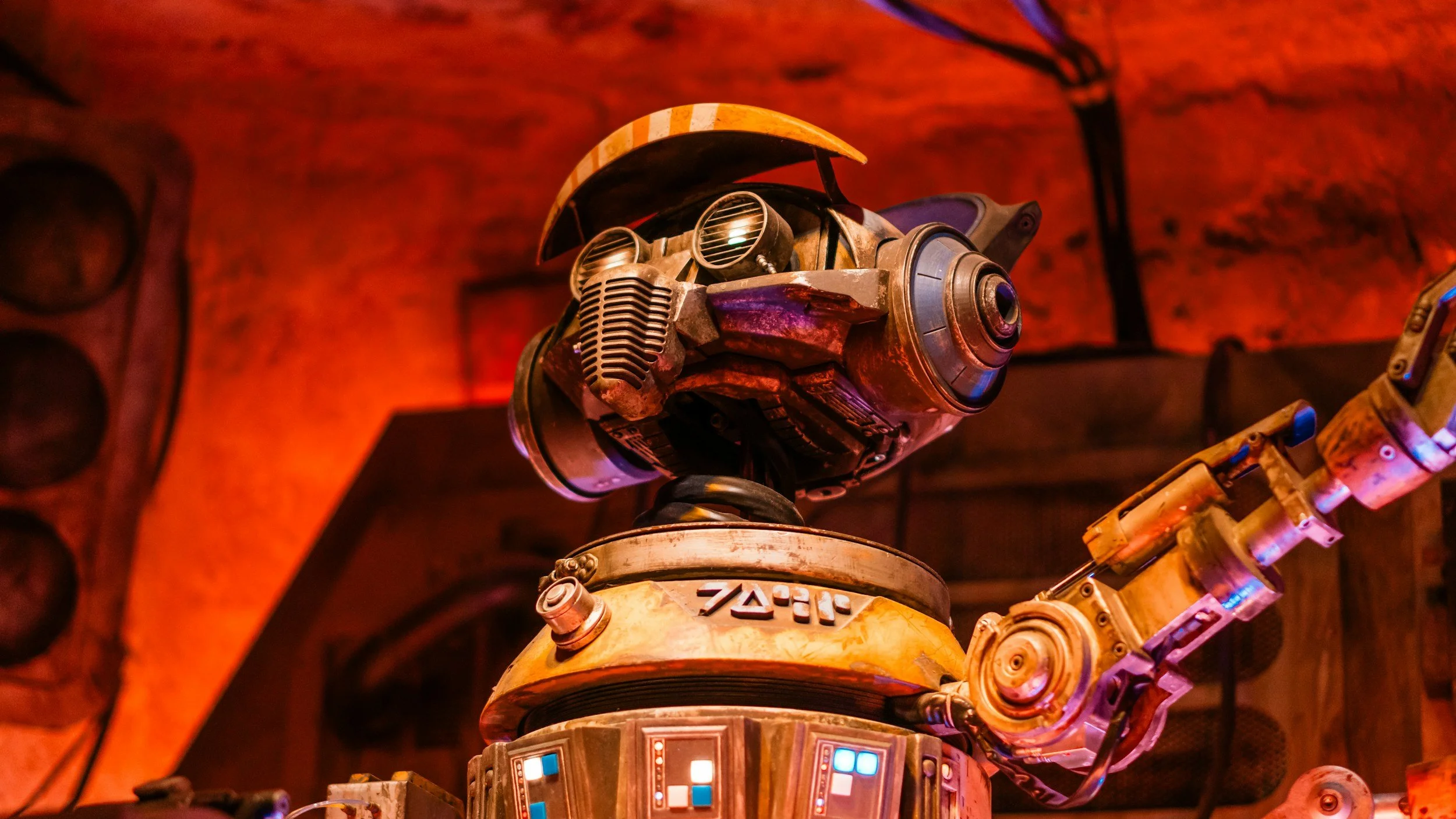
The next trillion-dollar companies may be the ones that sell Physical Work, seamlessly deploying Robots to manual tasks, transforming entire industries in the process.
By Tom Lipinski, Robotics and Physical AI Entrepreneur, Repeat Founder, CEO of AIRA
Introduction
Several related thought pieces appeared over the last few months that put the immense transformation brough about by Physical AI and Robots deployed into the real world into clear perspective. These include:
Services: The New Software by Julien Bek from Sequoia Capital (https://sequoiacap.com/article/services-the-new-software/)
The Layered Investment Case for Robotics by Bullhound Capital (https://bullhoundcapital.com/articles/assembled-intelligence-the-layered-investment-case-for-robotics/)
Sequoia Is Wrong: Services Aren’t the New Software - The Physical World Is by Guillermo Flor (heavily referencing Andrew Côté) - https://www.theaiopportunities.com/p/sequoia-is-wrong-services-arent-the
Work as a Service
In the first essay by Sequoia Julien Bek argues that the next trillion-dollar company will be a software company masquerading as a services firm. And the argument is simple: for every dollar spent on software, six are spent on services. If AI can now do the work, don’t just sell a tool. With the rapid advances of AI and Agents that can execute tasks the money is in capturing the labour budget, not the software budget.
The appeal: build the company that does the job itself and capture 10x revenue of the comparative SaaS model. Not software for accountants - the company that closes the books. Not software for lawyers - the company that reviews the contracts. Not software for insurance teams - the company that handles the claims. In his essay Julien states: “A company might spend $10K a year for QuickBooks and $120K on an accountant to close the books. The next legendary company will just close the books.”
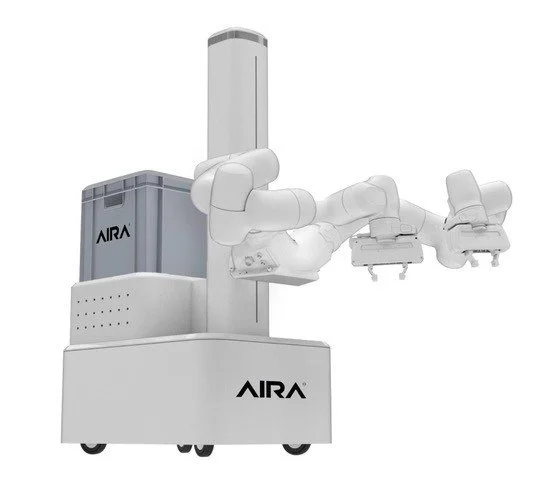
AIRA - A robotic mobile manipulator with two arms with grippers
But what Work?
There is a distinct difference between the digital (pure software) domain, with models dominated by few hugely capable AI labs and the physical domain where everything is up for grabs. To address that I propose a correction - the next trillion-dollar AI companies will sell physical work, not software or hardware. Instead of charging for tools, they will deploy robots to complete the physical, manual work and capture a share of the much larger global labour budget. I’ll explain.
As Guillermo points out, the flaw in Sequoia’s “sell work, not software” thesis is captured in Côté’s line: “Using AI for something trains it to do that task.”
Model providers improve their reasoning and tool use. Competitors replicate the workflow. Open-source models catch up. Customers learn to perform more of the process themselves. What was once a differentiated service, gradually becomes a native model capability or a standard feature, with companies built to do the job finding themselves one Anthropic release away from irrelevance.
Côté’s conclusion is that “every possible niche where you can use AI to do something better eventually becomes a niche occupied by AI.”
Separating the wheat from the chaff
This leads to a key question to be asked before building or backing an AI services company: what remains defensible after the foundation model has ingested a year of your usage? If the answer is “our workflow,” “our prompts,” or “our fine-tune,” you are selling the training data for your own obsolescence. If the answer is a proprietary distribution channel, a regulated license, or a physical asset the model cannot replicate, you have a real business. Most pure software services plays fail that test.
Sequoia is right that the labour budget dwarfs the software budget, which is exactly why “sell work” sounds bigger than “sell seats.” But labour-as-software still lives inside the services trap: it captures labour spend only until the model absorbs the task. The best move is to skip the trap entirely and go where the spend is both enormous and physically defensible. As Côté puts it, “the hard business of technology lies ahead, which is remaking the physical world. The other 98% of the economy.”
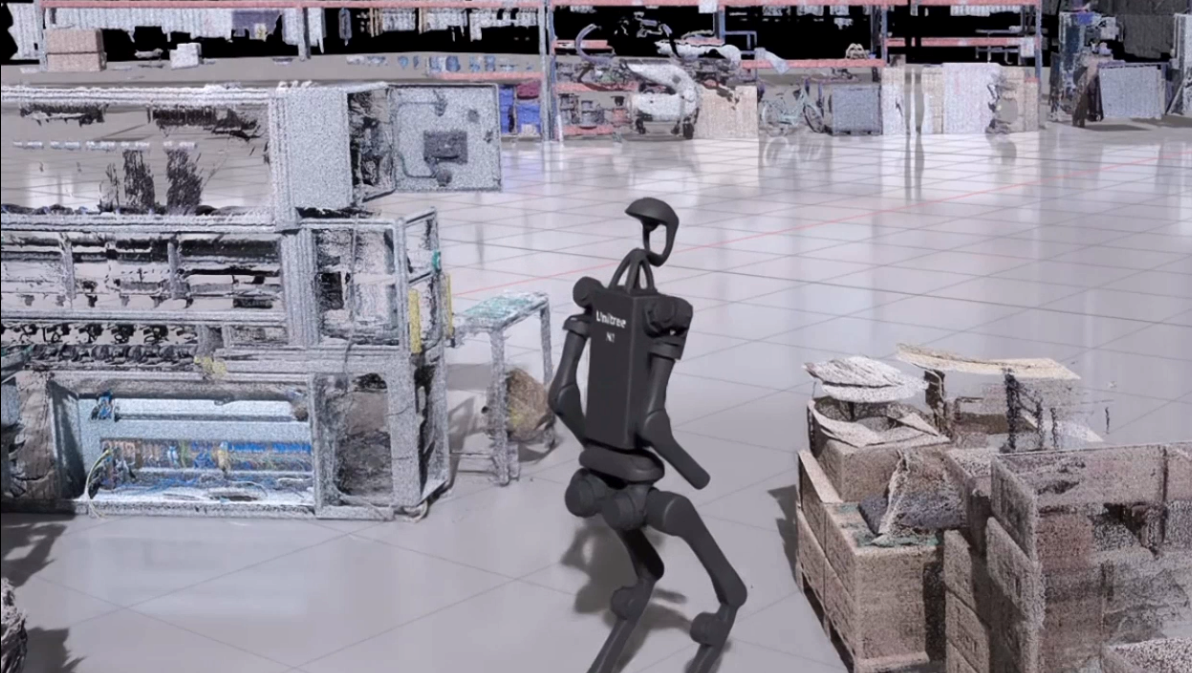
AIRA - Simulation of a photo-realistic factory environment with an H1 humanoid
Work as a Service with Robots
Hardware itself has not suddenly become as scalable as software. What has changed is the intelligence controlling the hardware: AI models, simulation, digital twins and more adaptable robots can be developed once, improved with data and reused across multiple machines and factories.
That means a company can increase output without increasing engineers and workers at the same rate, because one team can supervise more equipment and software updates can improve an entire installed fleet.
According to Guillermo “You will see software like margins and growth rates in physical industries where the TAM for a single industrial process is $400 billion, where demand is extremely price sensitive and the addressable market is massively under-estimated.”
The statement “extremely price sensitive,” is the engine of the whole thesis. In physical markets, demand is capped by price. When AI plus robotics collapses the cost of a process, you do not just win share, you unlock demand that never existed at the old price. That is how a mature-looking market turns out to be “massively under-estimated”: the visible TAM was measured at today’s cost, and cutting the cost expands the market underneath you.
The software-like margin comes from replacing per-unit human labour with a model-and-robotics cost that then serves rising volume at near-zero marginal increase (same robot can run three shifts for example). That is the same leverage curve that made software gross margins 80-plus percent, now applied to a process that currently runs at industrial margins because every unit of output needs proportional human operation.
Our own unit economics at AIRA - Artificial Intelligence. Real Abilities point to margins over 60% at 200+ robot deployments (per task), once the deployment data has been ingested and results in 90%+ levels of autonomy (while the customers enjoy 50%+ cost savings and massively boosted flexibility and scalability). This is more than a transformation, it’s a revolution.
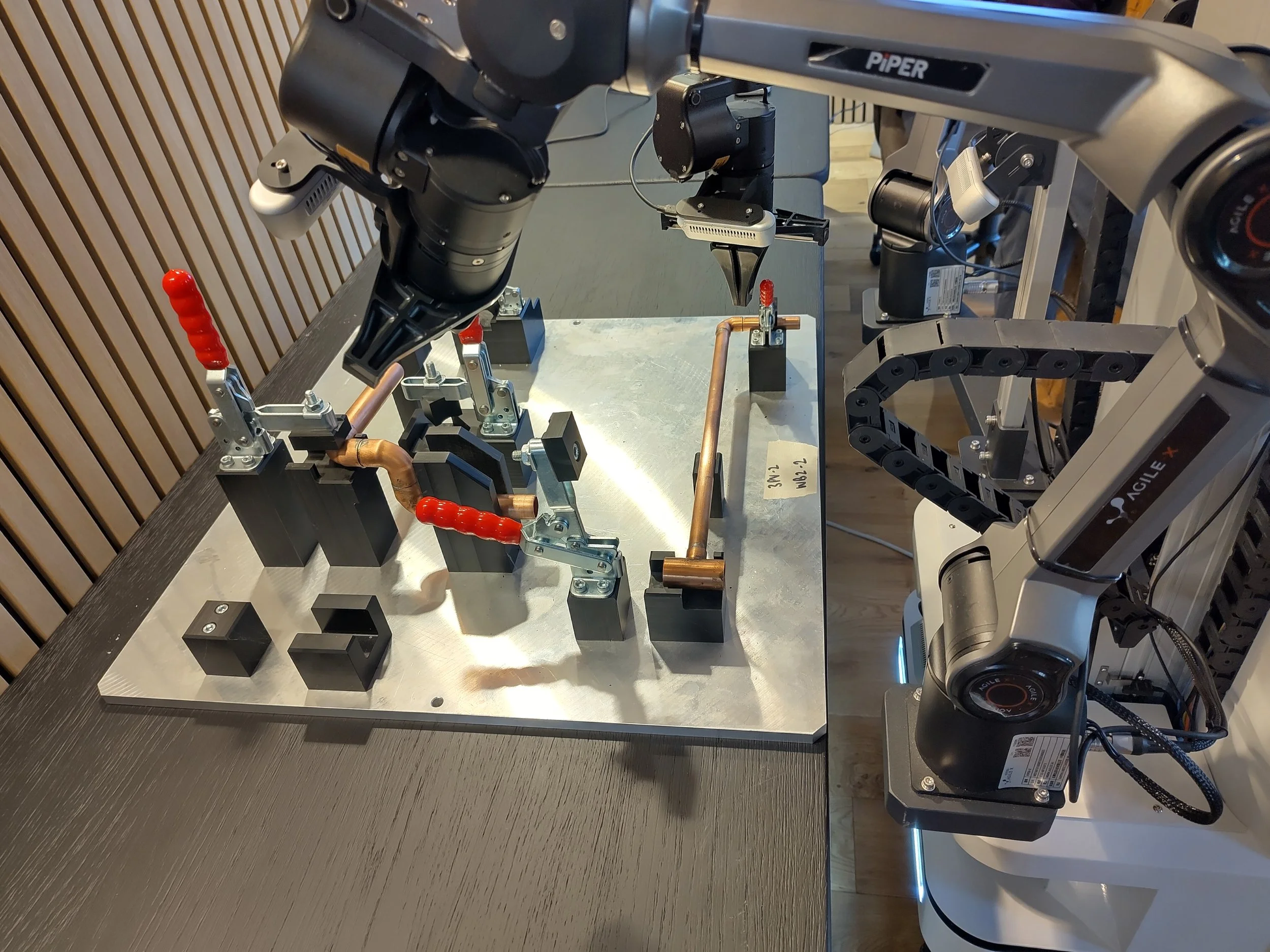
AIRA - Basic assembly of components within a jig by a mobile manipulator
The market is larger than you think
The reason legacy industrial markets have been ignored? “Lower annual growth rates” and “Lower leverage on value production.” Chemicals and steel grow at GDP-like rates, not SaaS rates, and each unit of value historically required proportional physical input, with no software-style leverage where one engineer serves a million users at near-zero marginal cost. That is why generalist VCs skipped them, and exactly why they are uncontested now.
AI plus robotics breaks both constraints at once. It removes the growth ceiling by unlocking demand that was capped by cost and capacity and adds software-style leverage by letting a handful of models and autonomous machines run processes that used to require armies of operators. “Do both, and a GDP-growth, low-leverage industry starts to behave like software while sitting on a revenue base ten times software’s size.”
The potential growth rates become unconstrained when you model what happens to volume after the ‘labour’ cost drops 40%. If that cut unlocks 3x the demand, you are not competing for a fixed pie, you are creating the market and you get to price it.
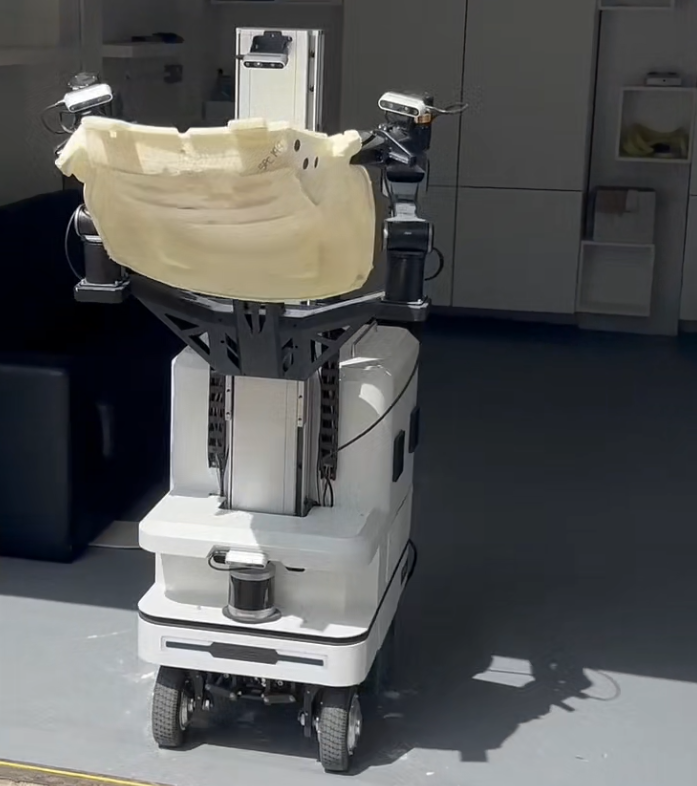
AIRA - General Purpose Robot moving a car seat foam from a conveyor belt to a stillage
Atoms
One of the notable founders paying attention is Travis Kalanick. His new company, Atoms takes the logic from ride-sharing into every factory, warehouse, and supply chain that still runs on unoptimized physical processes. It changes the competitive landscape entirely. If the physical world is just an atoms-based computer, then robotics isn't automation — it's infrastructure. The same reclassification that made servers into cloud computing and phones into platforms.
The playbook to copy from the ATOMS-style plays is consistent. Pick one physical process. Own the machine or the deployment, not just the model, so the foundation-model owner cannot commoditize you. Sell into a price-sensitive market where a cost cut unlocks new demand. Keep the defensible asset physical or regulated, the exact opposite of the services wrapper that trains its own killer.
If it is all about Physical AI, who wins?
From start-ups building robots (from specialised to humanoids) to companies capturing physical data or building Large Foundational Models, Physical AI is full of bets with very little actual traction pointing to potential winners. At times it feels like everyone is busy selling to everyone else with a lot of spectacle but very little actual customer value being created. At the same time the opportunity is vast and the ones that seize it can be next trillion-dollar companies. According to Bullhound Capital this can only happen by focusing on customers:
There is durable structural demand floor for robotics adoption.
The deployment moat is irreplicable.
Reliability beats capability.
Economics will be built by operational infrastructure, not technology vendors.
To expand:
Manufacturing is losing skilled workers through retirement faster than hiring cycles can replace them, while wages have repriced higher across industrial sectors.
Companies that deploy first accumulate site-specific recovery loops and workflow tolerances that no competitor can buy or synthesise. In robotics, the moat isn't just IP but accumulated operating hours under real-world liability.
Safety certification, edge-compute economics at fleet scale, and outcome accountability push deployments toward layered, domain-tuned architectures rather than monolithic foundation models, favouring companies that can convert technical capability into certified, recurring deployment over those that optimise for benchmark performance alone.
As hardware commoditises and intelligence becomes portable, the entity that owns workflow integration and uptime accountability owns the switching cost. This commercial transition, from selling technology to becoming operationally irreplaceable, is where the most defensible businesses in robotics are being built.
Conclusion
The next trillion-dollar companies may be the ones that sell Physical Work, seamlessly deploying Robots to manual tasks, transforming entire industries in the process.
About AIRA
AIRA deploys mobile, general-purpose robots for machine tending, assembly fixturing, and material handling. AIRA can train on specific tasks, supervise remotely, and charge at or below a client’s labour rate.
Tom Lipinski is the CEO of AIRA and a Robotics and Physical AI Entrepreneur.