


Visionary Governance® Briefing
The Future of Strategy is
Future Worldbuilding®
5 Minute read
By Nicolas De Santis
President,
Gold Mercury

For more than half a century, the strategic function of an enterprise has focused on analysis, planning, competitive positioning and resource allocation. These disciplines remain important, but they are no longer sufficient.
The strategic capability of an enterprise is no longer defined by its ability to produce better plans. It is increasingly defined by its ability to imagine, design and create entirely new futures.
This represents a fundamental shift in the purpose of strategy.
Tomorrow's strategy function will not simply optimise existing businesses. It will create the conditions for enterprises to build enduring systems, industries and ecosystems that generate value over decades rather than quarters.
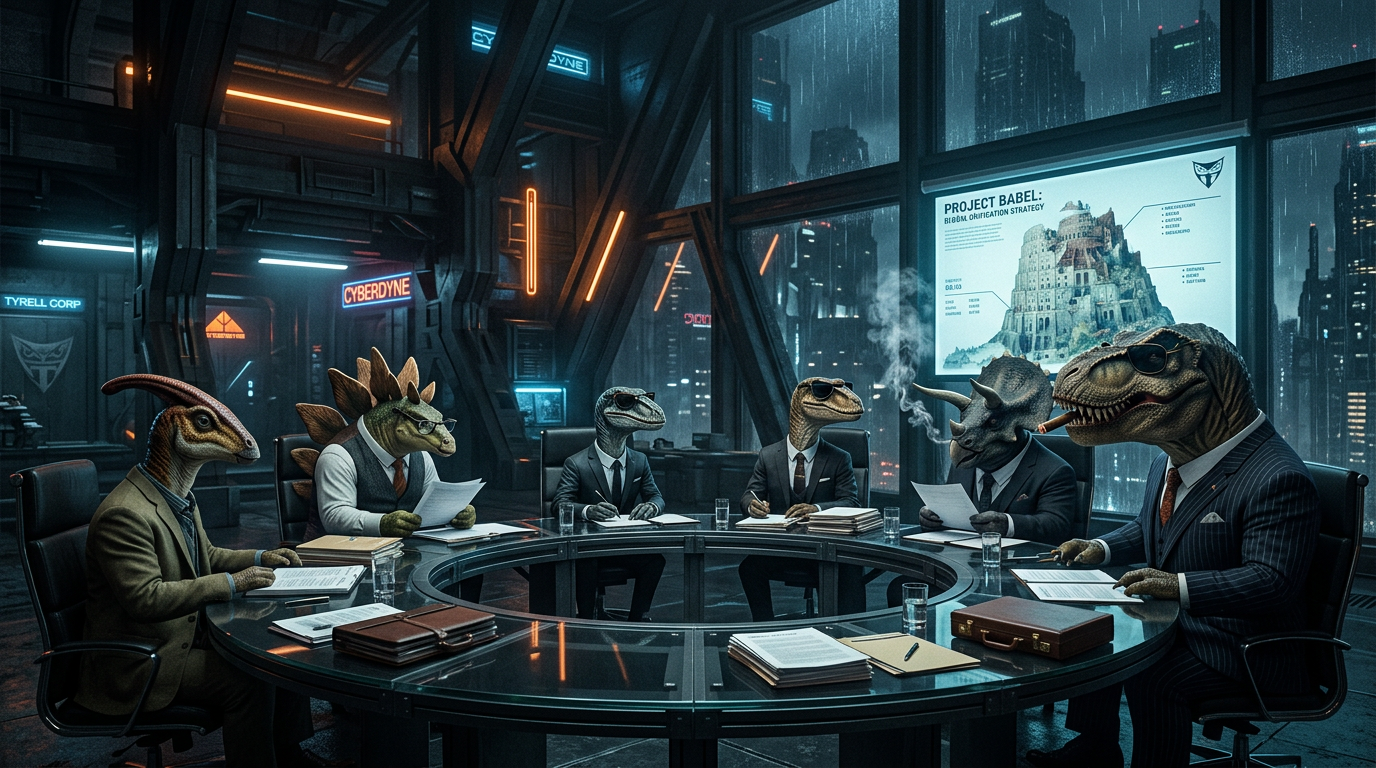
No more commoditised strategy sessions without imagination - The time for Enterprise Visioneering® is now.
Strategy Must Expand Beyond Planning
Most organisations continue to think within the boundaries of three-year strategic plans, annual budgets and quarterly performance cycles. These disciplines remain essential for operational excellence, but they were designed for a world where change was slower, more linear and more predictable.
Today's leaders face a fundamentally different reality. To thrive, they must become Future Visioneers®—leaders capable of imagining, designing and building the future rather than simply responding to it.
Artificial intelligence, biotechnology, quantum computing, geopolitical fragmentation, demographic change, environmental pressures and new regulatory systems are simultaneously reshaping the foundations of every industry.
In such an environment, strategy can no longer be confined to analysing the present and optimising existing businesses.
Its role must expand to enable Enterprise Visioneering® and Future Worldbuilding®—equipping organisations to create the future before competitors recognise its possibilities.

Building Worlds of Tomorrow
The Missing Capability: Enterprise Visioneering®
The lack of vision is not a failure of intelligence.
It is a cognitive limitation.
Most leadership teams have been trained to optimise the present rather than imagine multiple future realities. They excel at solving today's problems but often lack the mental frameworks required to build organisations capable of thriving twenty or thirty years from now.
This is why we describe Enterprise Visioneering® as a new strategic discipline.
Visioneering combines systems thinking, psychology, foresight and organisational design to help leaders imagine, evaluate and build future worlds before they exist.
Whether an organisation is a new venture, a start-up or a global enterprise, sustainable competitive advantage increasingly depends on translating ambition into transformational opportunities capable of creating generational value.

If a pet can communicate with its owner, it opens many possibilities
From Strategy to Future Worldbuilding®
Traditional strategy focuses on transformation, restructuring, market positioning, portfolio optimisation, change management and strategic pivots.
These remain essential disciplines for managing and adapting the enterprise. However, in an age of accelerating technological, geopolitical and societal disruption, they are no longer sufficient to create enduring competitive advantage.
They are not Future Worldbuilding®.
Future Worldbuilding® is the strategic discipline of designing and creating the future through the deliberate construction of new worlds, systems, industries, enterprises, products, services and ecosystems that generate enduring value for humanity and multi-generational prosperity. It is enabled by Enterprise Visioneering®—the cognitive leadership capability to imagine, design and build the future.
It begins with fundamentally different questions.
What is our Megavision®?
What is our Mega-Opportunity—the transformational opportunity capable of creating multi-generational value?
What is our Mega-Objective—the bold long-term mission that translates our Megavision® into action?
Only then do the next questions follow.
What future industries need to emerge?
What global challenges can we solve over the coming decades?
What new societal needs will arise?
Which technologies will redefine civilisation?
How must our enterprise—and its people—evolve to become architects of tomorrow's world?
Future Worldbuilding® requires leaders to think beyond products, markets and business models. It challenges them to design new systems of value, create new categories, build new industries and develop enterprises that shape the future rather than simply compete within it.
The ultimate objective is not merely to achieve sustainable competitive advantage. It is to create a future in which the enterprise becomes an enduring builder of economic, societal and civilisational value.

She needs you to become a Future Worldbuilder.
The Megavisionary Enterprise®
The organisations best positioned to thrive in the twenty-first century are what we call Megavisionary Enterprises®.
A Megavisionary Enterprise® is an organisation that systematically develops the cognitive, strategic and governance capabilities to design, build and continuously adapt across multiple future horizons while creating enduring value for shareholders, society and future generations. Rather than simply responding to change, it actively shapes the future through Enterprise Visioneering®, Future Worldbuilding® and long-term value creation.
This represents a fundamental departure from the traditional enterprise.
Most organisations devote the overwhelming majority of their strategic energy to the Execution Horizon—optimising performance against existing plans, budgets and operational objectives. While essential, this operational focus often limits leadership's capacity—and, equally importantly, its allocation of time—to imagine entirely new futures, develop multi-decade technology and innovation roadmaps, and design the next generation of value creation.
At the heart of every Megavisionary Enterprise® lies what we call Megavisionary Intelligence®.
Megavisionary Intelligence is the cognitive capability to create Megavisions®—bold, multi-decade visions that define the future role an enterprise intends to play in shaping industries, societies and civilisation itself. It enables leaders to think simultaneously across multiple time horizons, integrating the lessons of the past, the realities of the present and the possibilities of the future into better decisions today.
To cultivate this capability, Megavisionary Enterprises operate across what we call the Strategic Time Continuum®—a cognitive framework that enables leaders to think exponentially, move fluently across time horizons, learn from history, interpret present complexity, envision alternative futures and make better decisions in the present.
The Strategic Time Continuum® extends beyond forecasting, trend analysis, scenario planning and strategic foresight. While these disciplines help organisations anticipate possible futures, they do not, on their own, enable leaders to design and build the future their enterprise intends to create.
Our approach enables Megavisionary leaders to identify emerging systems, anticipate industry discontinuities, develop breakthrough technology and innovation roadmaps, and create the next generation of value before markets fully recognise the opportunity.
This multi-temporal intelligence becomes a profound competitive advantage because transformational futures are rarely created through linear thinking. They are created by leaders capable of seeing beyond the visible horizon, deliberately building what comes next and inspiring their organisations to pursue a shared long-term destiny.
The result is not simply a better strategy. It is a Megavision®—a compelling multi-decade blueprint that aligns purpose, innovation, governance, communications and execution around the future the enterprise intends to build.

The Strategic Time Continuum
The New Role of the Strategy Function.
The strategy function is not disappearing.
It is evolving.
Its mandate is expanding from strategic planning to Future Worldbuilding®.
From optimising current performance to Enterprise Visioneering® and designing multi-decade enterprise evolution.
From responding to disruption to deliberately creating the future.
Financial discipline, operational execution and investment management will always remain important. Organisations will continue to measure performance through financial, operational and strategic outcomes.
However, the most consequential strategic decisions are rarely measured over quarters. Investments in technology platforms, infrastructure, governance systems, talent and organisational capabilities shape an enterprise for decades. These decisions should therefore be guided by a Megavision®—a compelling multi-decade blueprint that defines the future role the enterprise intends to play within industries, society and the ecosystems it seeks to shape.
This requires Enterprise Visioneering® to become a core cognitive leadership capability. Rather than focusing exclusively on planning and optimisation, the strategy function must cultivate Megavisionary Intelligence®, enabling leaders to imagine, design and build the future by thinking across multiple time horizons through the Strategic Time Continuum®. In doing so, they translate long-term Megavisions® into present-day decisions and the deliberate creation of tomorrow's enterprise.
Without this capability, organisations risk executing today's plans with excellence while unknowingly building the wrong future.
The enterprises that create enduring value will not simply anticipate change. They will shape the future they intend to lead.
The primary responsibility of the strategy function is therefore no longer simply to optimise today's enterprise.
It is to create tomorrow's.
That is the new role of strategy.
The future will not be led by the organisations that merely predict change. It will be led by those that imagine, design and build what comes next.
That is Future Worldbuilding®.

Finally, a system to visioneer and build the future worlds that are needed.