

H.M. King Juan Carlos I
Head of State of Spain (1975–2014).

©Gold Mercury Photo Archives. All rights reserved.

Award Motivation
For his Visionary Governance in leading Spain's peaceful transition from dictatorship to democracy and in safeguarding its constitutional order.
Award details
H.M. King Juan Carlos I of Spain was the recipient of the 1976 Gold Mercury International Peace Award in recognition of his leadership in Spain's peaceful transition to democracy. Born in Rome, Italy, in 1938 during the exile of the Spanish Royal Family following the proclamation of the Second Spanish Republic in 1931, he returned to Spain in 1948 after General Francisco Franco agreed that he should receive his education there. He completed his military training at Spain's naval, army and air force academies before studying law, political economy and public finance at the Complutense University of Madrid.
In 1969, Franco formally designated Prince Juan Carlos as his successor, expecting him to preserve the existing political order. Following Franco's death on 20 November 1975, Juan Carlos was proclaimed King of Spain on 22 November 1975. From the outset of his reign, he committed himself to restoring parliamentary democracy, declaring in his first address to the Cortes his determination to serve all Spaniards and lead the country towards a more open and representative political system.
Working closely with Prime Minister Adolfo Suárez, King Juan Carlos guided a far-reaching programme of political reform that culminated in Spain's democratic transition and the adoption of the 1978 Constitution. His vision, courage and commitment to national reconciliation were recognised by Gold Mercury International, which presented him with the Gold Mercury International Peace Award in 1976.
King Juan Carlos played a decisive role in defending Spain's democratic transition during the attempted coup d'état of 23 February 1981 (23-F). As military officers attempted to overthrow the constitutional government, he appeared on national television in his capacity as Commander-in-Chief of the Armed Forces, unequivocally condemning the coup and ordering the military to uphold the Constitution and Spain's democratic institutions. His intervention is widely regarded as the decisive moment that ensured the failure of the coup and secured Spain's young democracy.
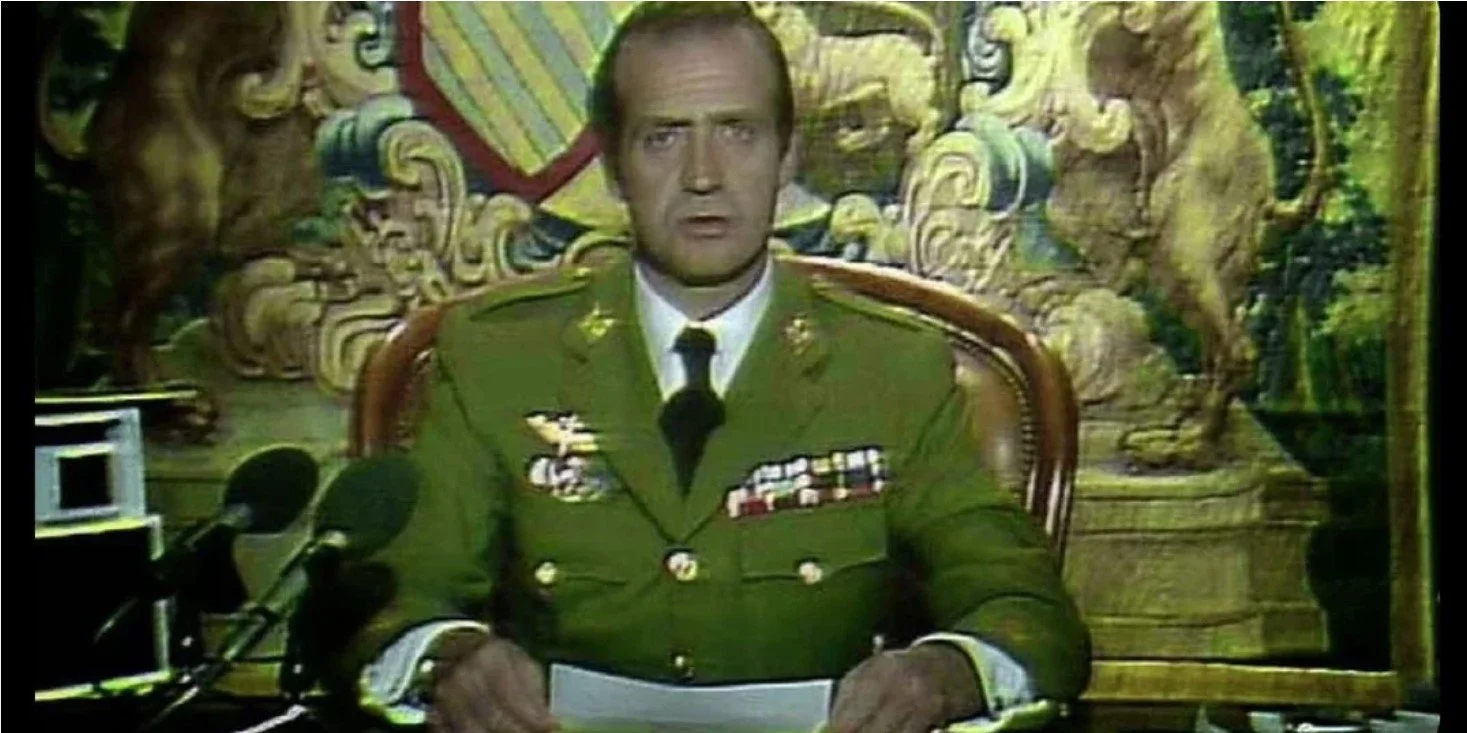
King Juan Carlos I addresses the Spanish nation in a televised broadcast on 23 February 1981, condemning the attempted military coup and defending Spain's newly established democratic Constitution.
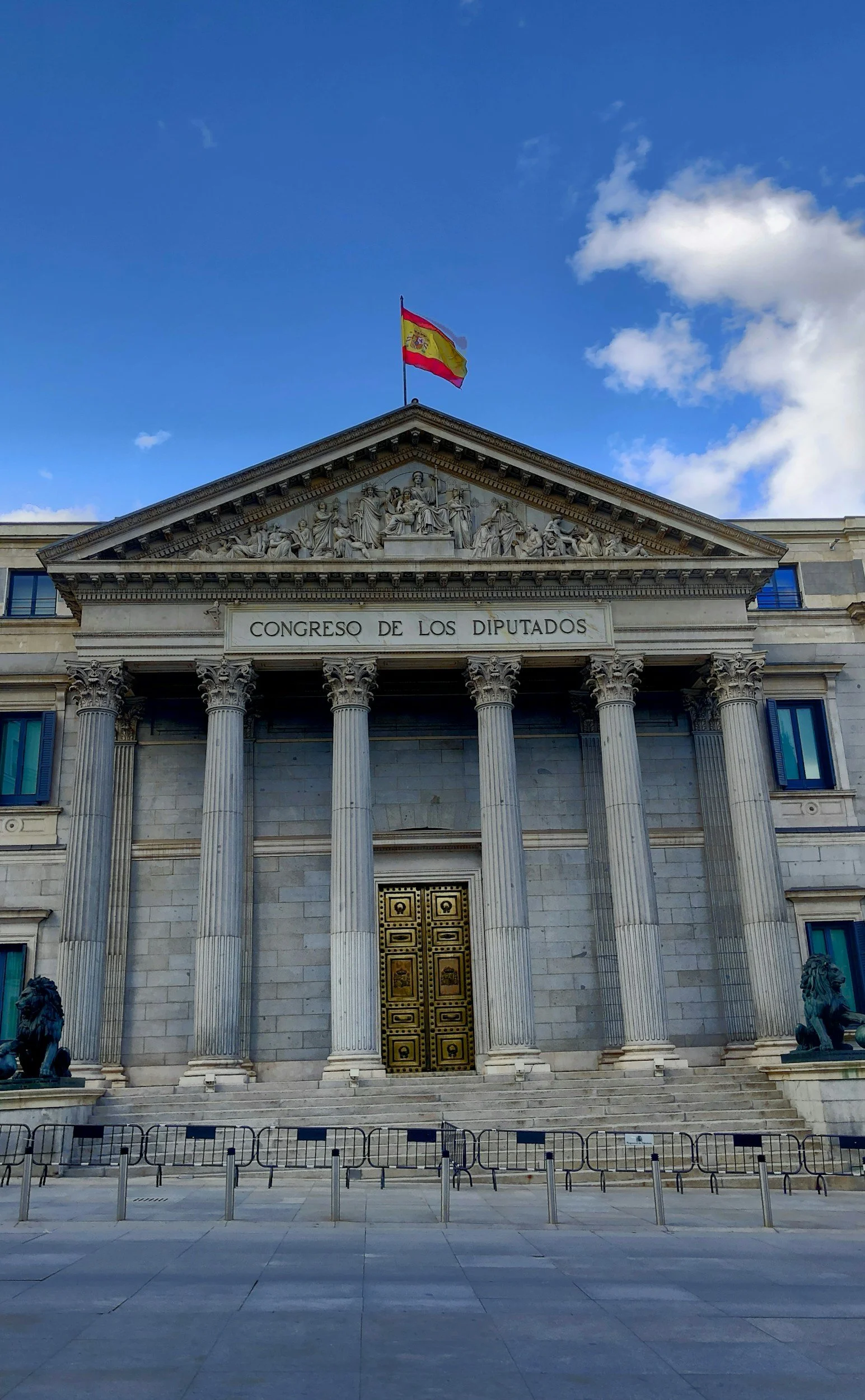
King Juan Carlos played a decisive role in defending Spain's democratic transition during the attempted coup d'état of 23 February 1981 (23-F).